Shackleton Crater, the Moon
Lunar Lighthouse
Status
Vision concept
Year
2018
Building Area
Location
Shackleton Crater, the Moon
Role
Design of the geometries, Application strategies
Building Type
Lunar habitat
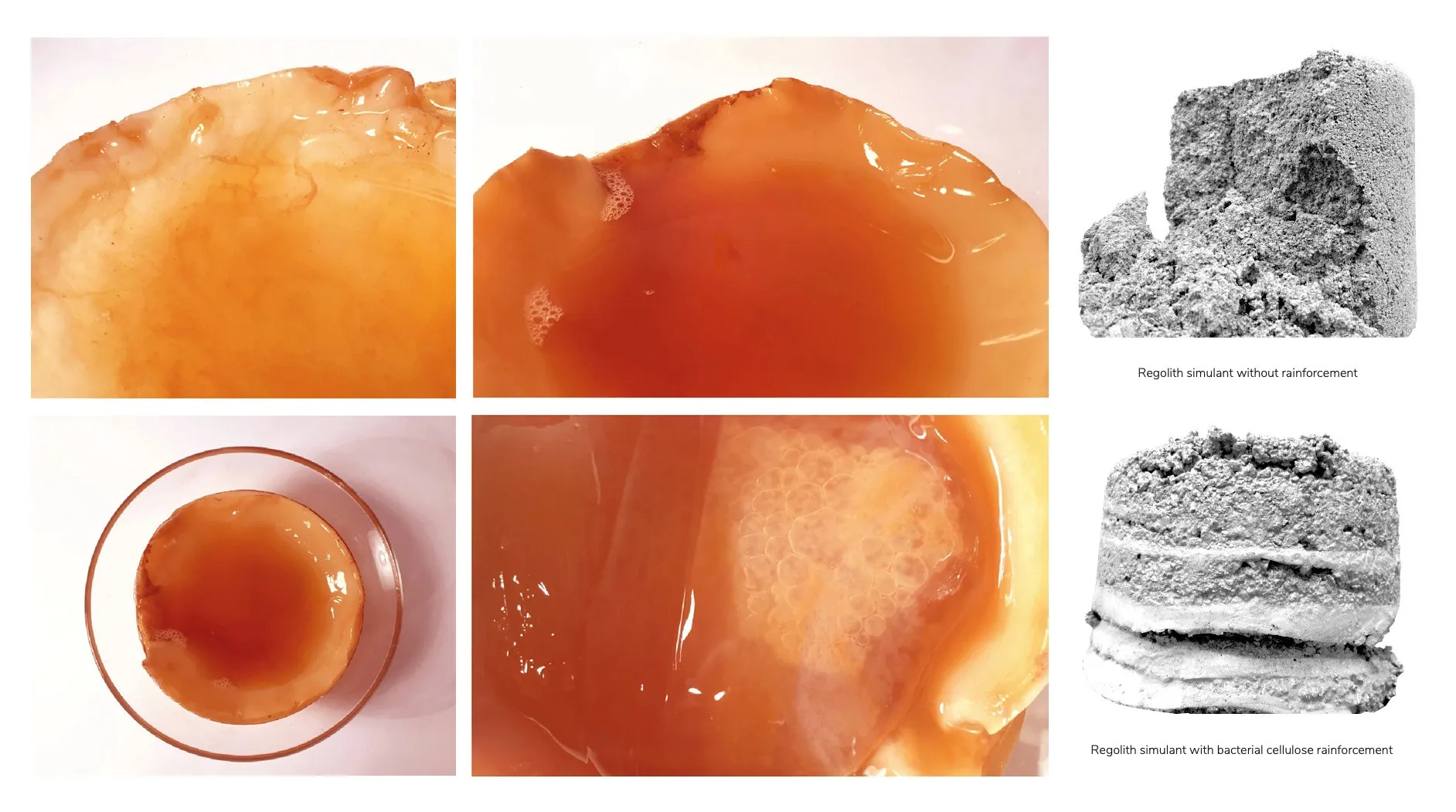
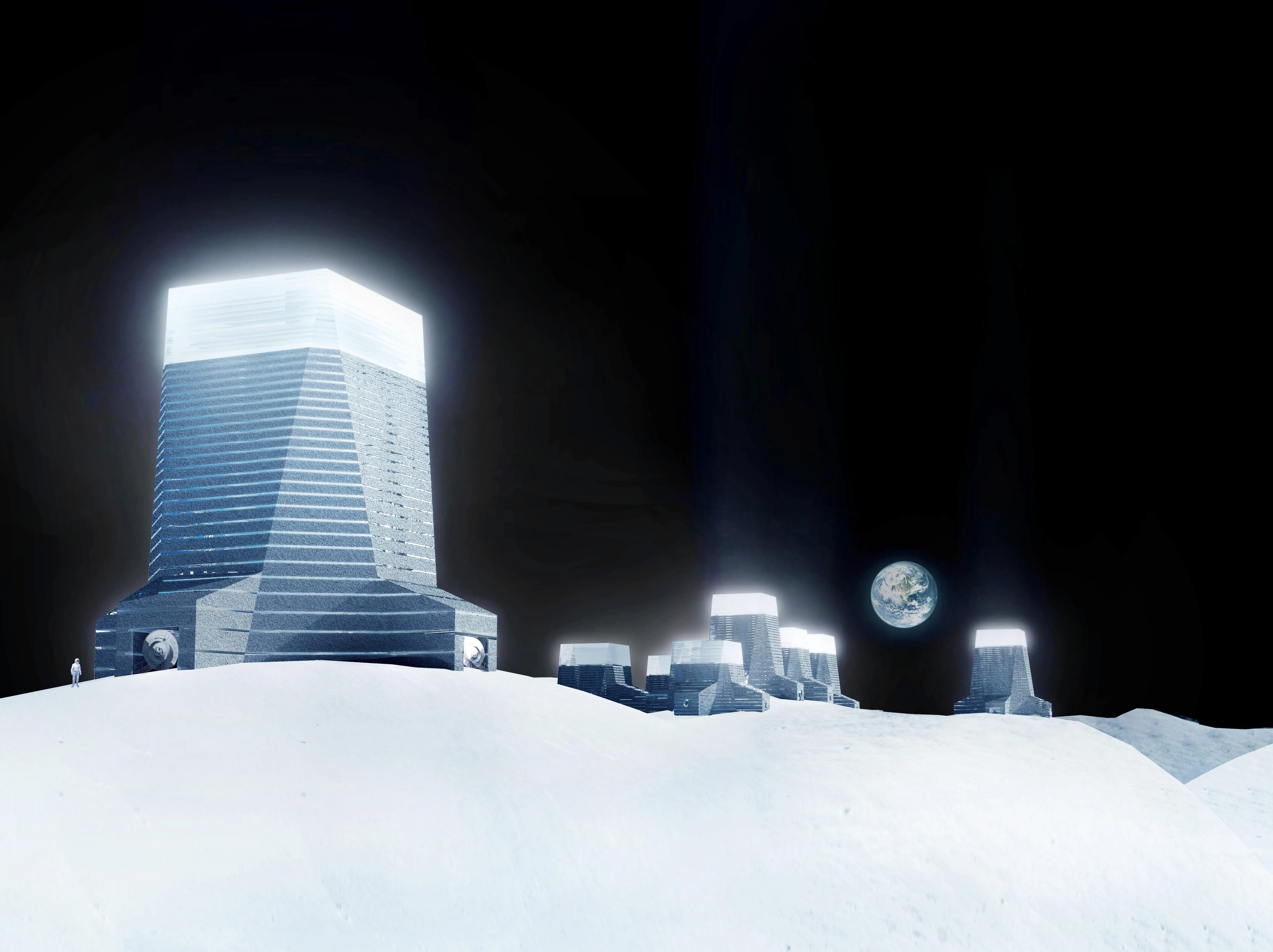
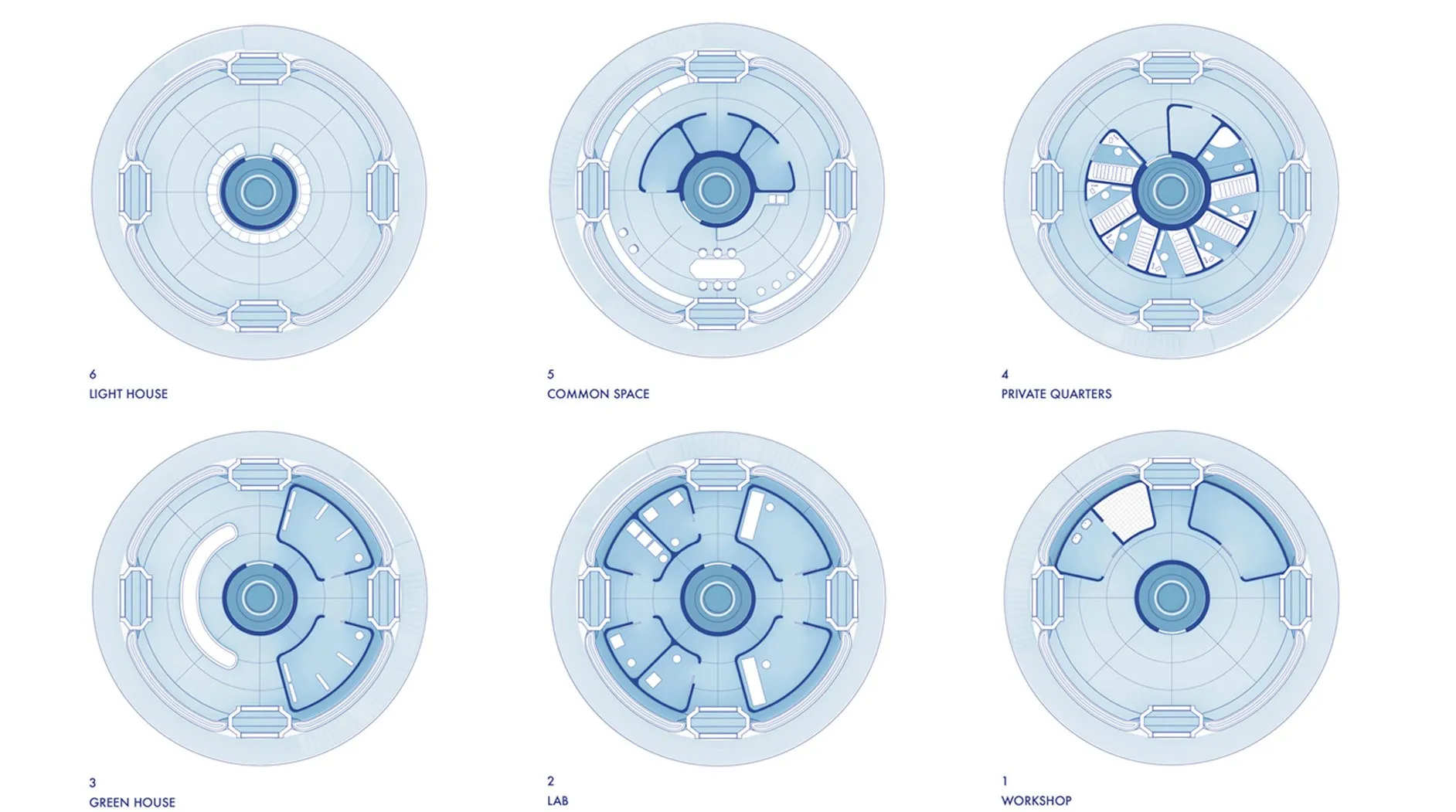
Lunar Lighthouse explores a hybrid radiation protection system combining lunar regolith with in-situ grown bacterial nano-cellulose membranes. Conceptually located on the rim of Shackleton Crater, the structure leverages the natural shielding properties of regolith while introducing a translucent nano-cellulose layer that reinforces the architecture and enables vertical construction. The regolith mass provides primary radiation protection, while the nano-cellulose membranes stabilize the structure and create a semi-transparent envelope. This hybrid material strategy allows sunlight to penetrate the habitat, bringing natural illumination into the interior spaces while maintaining effective shielding from harmful cosmic radiation. Beyond its structural and environmental functions, the design also addresses astronaut well-being. Long-duration missions on the Moon can produce significant psychological strain, particularly due to isolation and the distance from loved ones on Earth. The project proposes a transparent observation module at the top of the structure, allowing astronauts to see the home planet in the lunar sky. This visual connection with Earth could help reduce feelings of isolation and provide emotional reassurance during extended missions. The translucent nano-cellulose layer would also softly glow when illuminated from within, making the structure visible across the lunar surface. During extravehicular activities, the base would act as a navigational beacon, much like a lighthouse guiding sailors at sea, helping astronauts orient themselves and safely return to the habitat.